
What Is a Drone Thermal Survey?
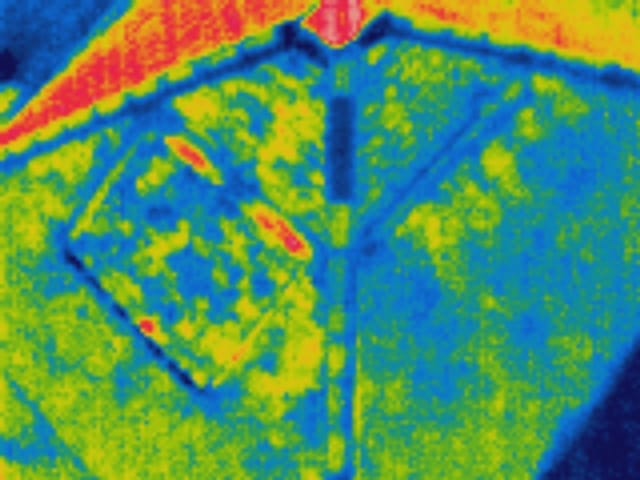
A drone thermal survey uses a radiometric thermal camera flown over your roof or building to capture the surface temperature of every area from the air. Because heat escapes through gaps in insulation, damp patches and failing materials at a different rate to the surrounding structure, a thermal image makes problems visible that the naked eye, and a standard camera, simply cannot see. From a single flight we can survey an entire roof, façade or solar array and hand you a clear picture of where energy, and money, is being lost. As a CAA-authorised, GVC-licensed and fully insured operator, we carry out every thermal imaging roof survey safely and legally, with no scaffolding, ladders or disruption.
How the Drone Process Works
We confirm the site, airspace and any permissions, then schedule the flight for the right conditions. Thermal surveys are most accurate in cool, dry or overcast weather, or early morning.
Our pilot flies a calibrated thermal and 4K visual camera over the structure, capturing paired thermal and standard imagery of every roof plane and elevation.
We systematically cover every roof plane and elevation, pairing thermal and 4K visual imagery so cold bridging, damp and hot spots stand out clearly.
You receive the full set of thermal and matching visual imagery, delivered digitally and organised by area so it's easy to review or share.
Who It's For
Why Choose a Drone Heat Loss Survey?
Everything is captured from the air. No scaffolding, no roof access, no risk to occupants or staff.
Radiometric thermal imaging reveals heat loss, damp and defects impossible to spot with the naked eye.
A drone survey costs a fraction of scaffolding or a cherry picker, and covers far more ground.
Most sites are flown in a single visit, with your annotated imagery back to you quickly.
What You Receive
Frequently Asked Questions
Areas We Cover
Based in Cumbria, we travel across the UK for survey and inspection work. We regularly operate throughout Cumbria and the Lake District, across the North West and North East, and up to the Scottish border, and take on projects nationwide.